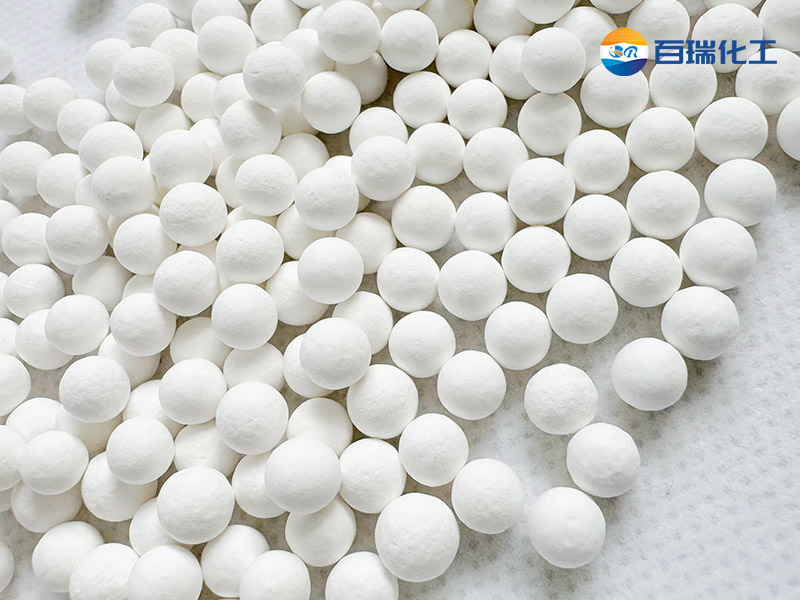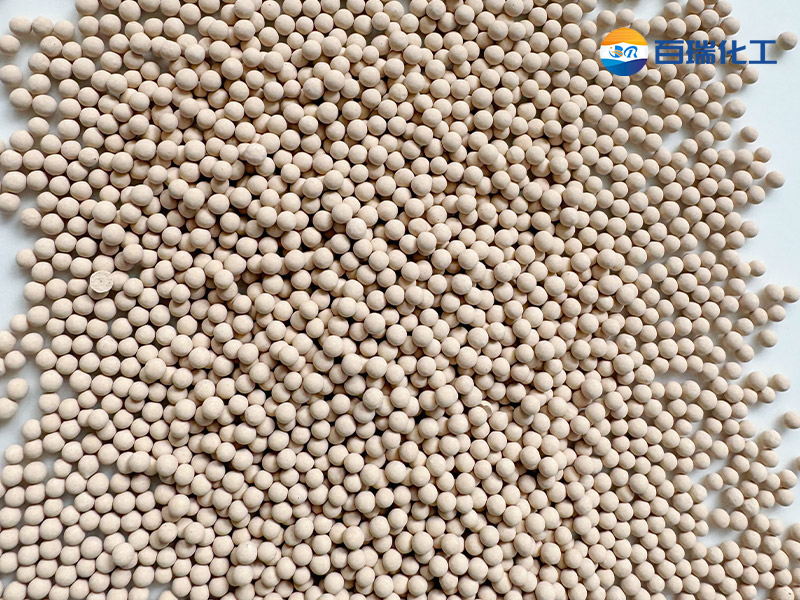


Activated alumina, as an important industrial adsorbent and catalyst carrier, is widely applied in various fields such as petrochemicals, gas drying, and water treatment. However, not all activated alumina products possess the same performance, and the quality differences mainly lie in several key indicators. Understanding these important indicators is crucial for the correct selection and application of activated alumina.
一、 Specific Surface Area: Core Indicator of Adsorption Capacity
Specific surface area refers to the total surface area of active alumina per unit mass, usually expressed in m²/g. This indicator directly affects the adsorption capacity of the material:
• Commonly, the specific surface area of ordinary active alumina is generally between 200 and 350 m²/g
• High-performance products can reach over 400 m²/g
• The larger the specific surface area, the stronger the adsorption capacity usually is
It should be noted that a larger specific surface area is not always better. An excessively high specific surface area may lead to a decrease in mechanical strength. Therefore, a balance needs to be struck based on the specific application scenarios.
二、 Pore Volume and Pore Size Distribution: Key Factors Determining Adsorption Selectivity
Pore volume and pore size distribution are another set of important parameters that affect the adsorption performance of activated alumina:
1. Pore volume: It refers to the total volume of pores per unit mass of activated alumina, generally ranging from 0.3 to 0.8 cm³/g.
2. Pore size distribution:
o Micro pores (<2 nm): Suitable for adsorption of small molecules.
o Mesopores (2 - 50 nm): Balance adsorption and diffusion.
o Macropores (>50 nm): Facilitate material transport.
Different applications have specific requirements for pore size distribution. For example, mesoporous products are commonly used in water treatment, while micro-porous materials are preferred for gas drying.
三. Mechanical Strength: Assurance of Service Life
Mechanical strength is an important indicator for evaluating the compressive and wear-resistant capabilities of activated alumina:
• Usually expressed as N/ particle or % wear rate
• For industrial applications, the compressive strength of a single particle is generally required to be ≥ 50N
• For fixed-bed applications, it is even higher, often requiring ≥ 80N
• For fluidized-bed applications, attention should be paid to the wear rate, generally requiring < 1%
Insufficient mechanical strength can lead to pulverization, increase pressure drop, and shorten service life.
四. Adsorption Capacity: Practical Application Performance Indicators
Adsorption capacity refers to the maximum amount of substances that a unit mass of active alumina can adsorb under specific conditions:
• Static adsorption capacity: Measured under ideal laboratory conditions
• Dynamic adsorption capacity: Measured under actual working conditions, which is more valuable for reference
• Different applications focus on different adsorption substances:
o Gas drying focuses on water adsorption capacity
o Water treatment focuses on adsorption capacity of fluorine, arsenic, etc.
五. Chemical Composition and Purity: Affecting Stability and Selectivity
The chemical composition of active alumina has a significant impact on its performance:
1. Al₂O₃ content: Generally in the range of 90-99%, the higher the purity, the more stable the performance
2. Impurity content:
o Na₂O content affects thermal stability (<0.5% is ideal)
o Fe₂O₃, SiO₂, etc. affect catalytic performance
3. Modified components: Some applications may add special components to enhance performance
六. Other Important Indicators
1. Bulk density: Affects filling volume and pressure drop
2. pH value: Surface acidity and basicity affect certain adsorption processes
3. Thermal stability: Attention should be paid to the phase transition temperature for high-temperature applications
4. Regeneration performance: Determines service life and economic efficiency
Understanding these key indicators of active alumina not only helps in the correct selection of products but also enables optimization of usage conditions and prolongation of service life. In actual procurement and application, one should consider various indicators comprehensively based on specific needs. When necessary, consult professional suppliers for the best usage effect and economic benefits. Remember, there is no "best" active alumina, only the "most suitable" active alumina.
If you have any needs or questions about active alumina, please feel free to contact us! We will serve you wholeheartedly!